

7 Mistakes You're Making with Coffee Storage (And How to Fix Them)
Listen up. You've invested in premium beans, maybe even some of Mob Crew's finest blends, but somewhere between the roastery and your morning brew, something's gone sideways. Your coffee's losing its punch. The aroma's fading. That bold, roasted legacy you paid good money for? It's slipping through your fingers like a botched heist.
Here's the truth: even the best beans in the game can't survive amateur hour storage. You wouldn't leave a briefcase full of cash on the curb, would you? So why treat your coffee any different?
We're pulling back the curtain on seven deadly sins of coffee storage, mistakes that are quietly sabotaging your morning ritual. Consider this your wake-up call.
Mistake #1: Exposing Your Beans to the Light
The Hit: You've got your beans sitting pretty in a clear glass jar on the counter. Looks good, right? Wrong. That's like leaving evidence under a spotlight. Light, especially UV rays, breaks down the delicate flavor compounds in your coffee through photodegradation. Every hour that sunlight hits those beans, you're losing the fight.
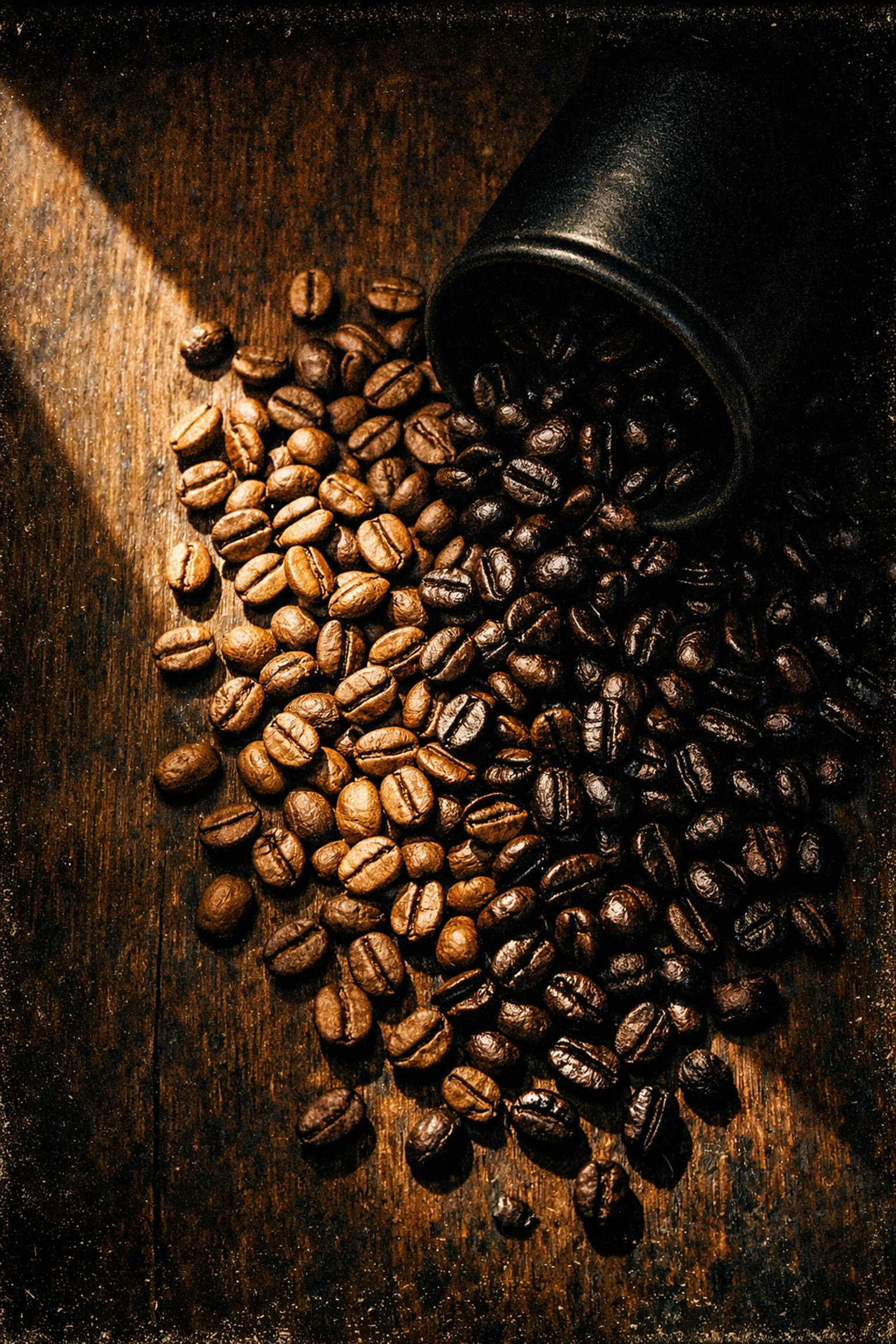
The Fix: Go dark. Opaque containers are your best defense, think of them as the getaway car for your coffee's freshness. Stainless steel, ceramic, or dark-tinted glass stored in a cabinet away from windows. If you're committed to that glass aesthetic, keep it buried deep in your pantry where the sun don't shine.
Mistake #2: The Fridge Job Gone Wrong
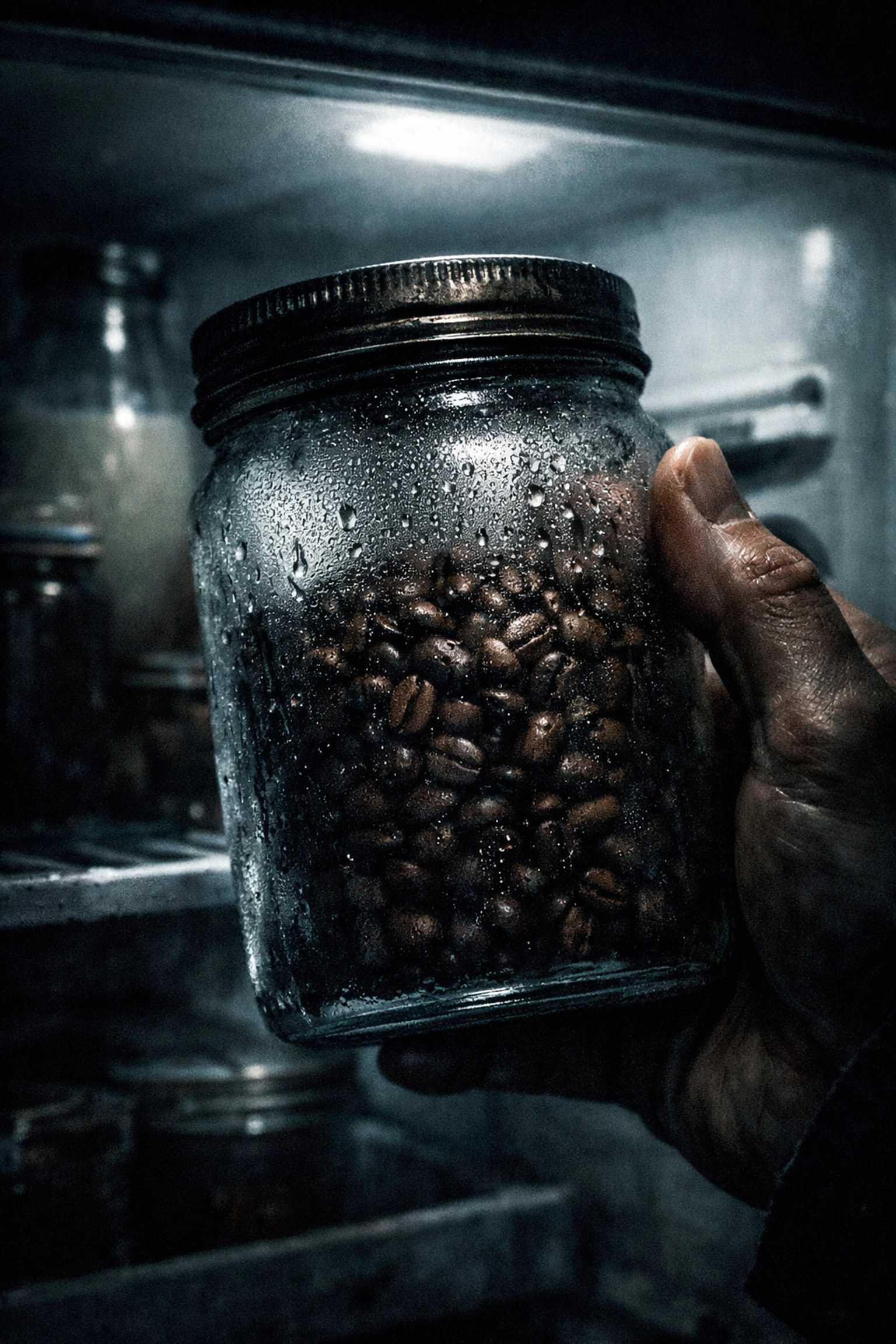
The Hit: Someone told you the fridge or freezer keeps things fresh, so you stashed your beans in the cold storage. Bad move. Here's what's really going down: every time you pull that bag out, condensation forms. Moisture is coffee's sworn enemy. Those beans absorb water faster than a snitch talks, and while they're at it, they're picking up every odor in your fridge, last night's garlic, that questionable leftover container, all of it.
The Fix: Room temperature is your sweet spot. Keep your specialty-grade beans in a cool, dark pantry or cupboard, sealed tight in an airtight container. Away from the stove. Away from the window. Away from anything that generates heat or humidity. Think of it as a safe house, temperature controlled, secure, untouchable.
Mistake #3: The Plastic Bag Setup
The Hit: That flimsy plastic bag or even those fancy valve bags your beans came in? They're not cutting it. Oxygen's sneaking in through microscopic gaps, oxidizing your coffee and turning it stale before you can finish the bag. Those one-way valves let CO2 out, sure, but they can't stop air from creeping back in. It's a compromised operation from the start.
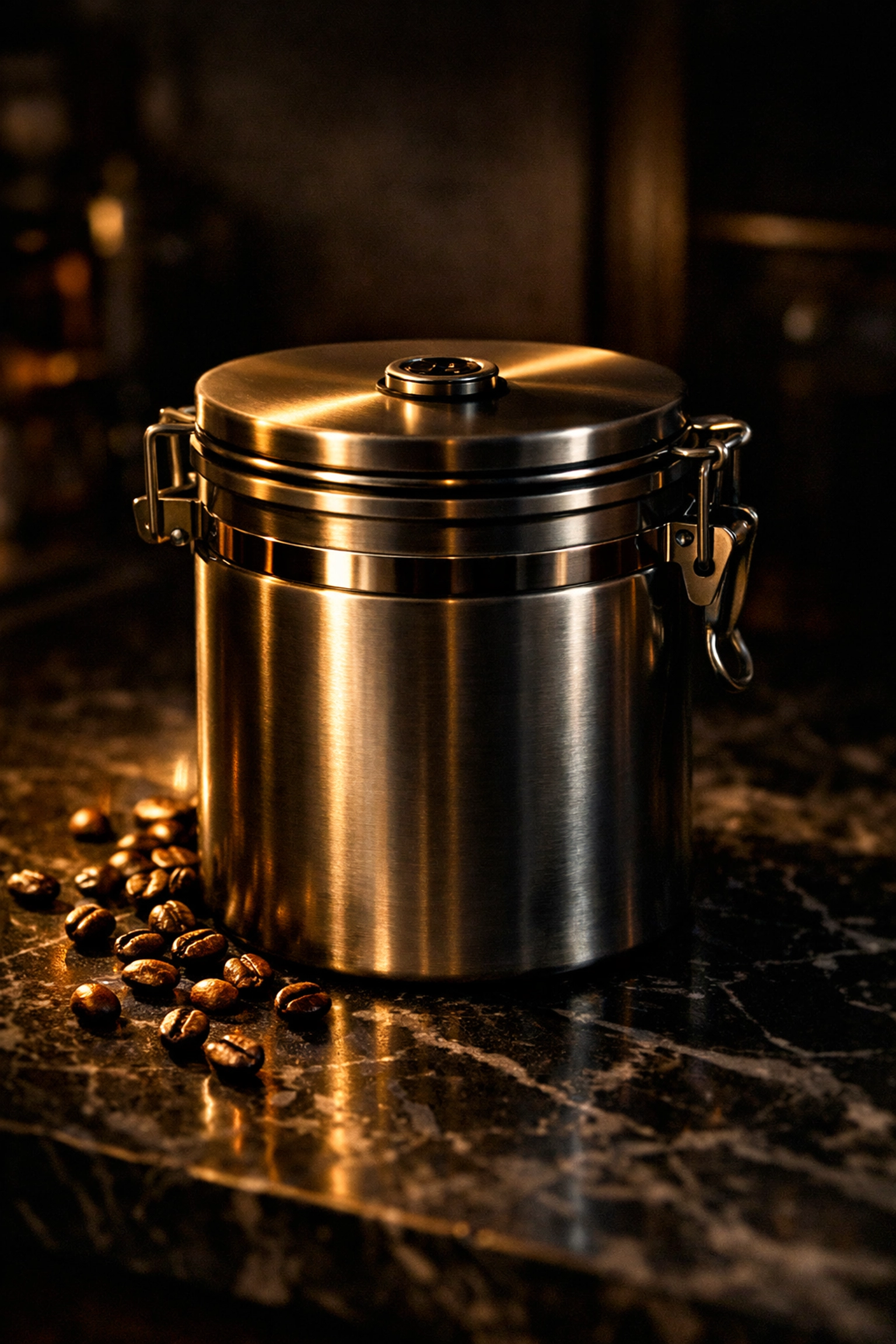
The Fix: Transfer your beans to a properly sealed container the moment you get home. We're talking airtight containers specifically engineered for coffee storage, the kind with CO2 release valves that work both ways. They let your beans breathe out while keeping the bad elements out. It's fortress-level protection for your morning ritual.
Mistake #4: Trusting the Original Packaging
The Hit: You figure the roaster knows best, so you leave your beans in that paper bag or zip-lock pouch. Here's the problem: those bags aren't designed for long-term storage after opening. Paper bags leak air like a rusty pipe, and most resealing mechanisms fail to create a true airtight seal. Your beans are sitting ducks.
The Fix: The second you crack that seal, you're on borrowed time. Invest in a quality airtight container, ceramic, stainless steel, or vacuum-sealed. Transfer immediately. Don't wait. Don't negotiate. Mob Crew's blends deserve better than a compromised bag job.
Mistake #5: Buying in Bulk Like There's No Tomorrow
The Hit: You scored a deal on five pounds of beans and thought you hit the jackpot. But unless you're running a small café out of your kitchen, you've just guaranteed that the last two pounds will taste like cardboard. Coffee starts deteriorating the moment it's roasted, and even perfect storage can't stop time completely.
The Fix: Buy smaller quantities more frequently. A two-week supply is the sweet spot, enough to make restocking convenient, but not so much that freshness becomes collateral damage. Think precision, not excess. Quality over quantity. It's the difference between a clean operation and a sloppy one.
Mistake #6: Pre-Grinding Everything at Once
The Hit: You ground up your entire bag on Sunday to save time during the week. Congratulations, you've just fast-tracked your coffee's demise. Ground coffee has exponentially more surface area exposed to air, which means oxidation goes into overdrive. What took weeks to go stale as whole beans now takes days as grounds.
The Fix: Grind on demand. Every single time. Yes, it takes an extra two minutes. Yes, it's worth it. Whole beans are like keeping your cards close to your chest: they protect the goods until the moment you need to play them. Pre-ground coffee? That's showing your hand too early. Our international collection wasn't sourced from around the globe just to be ground into oblivion three weeks before you drink it.
Mistake #7: Storing Coffee in the Wrong Neighborhood
The Hit: Your beans are sitting right next to the garlic powder, curry spices, and onions in your pantry. Coffee beans are porous: they're basically flavor sponges. They'll absorb every strong scent in the vicinity, and before you know it, your morning brew tastes like last night's stir-fry. That's not complexity in your cup. That's contamination.
The Fix: Give your coffee its own dedicated space. Away from spices. Away from strong-smelling foods. Away from anything with an odor that could migrate. Think isolation, not integration. Your beans need witness protection from aggressive aromatics.
The Bottom Line: Respect the Bean
Coffee storage isn't rocket science, but it does require discipline. Every mistake on this list is costing you flavor, aroma, and that morning ritual you've come to depend on. The good news? Every single one of these problems has a simple, actionable fix.
Treat your beans like the premium product they are. Use opaque, airtight containers. Keep them at room temperature in a dark, cool location. Buy smaller quantities. Grind fresh. Keep them away from contaminants.
Do this right, and that bag of Mob Crew's finest will hit just as hard on the last cup as it did on the first. Because when you're running a tight operation, there's no room for sloppy storage.
Your move.